• Welcome to your new Gnomio site

    Now, you are in control!

    Moodle is an open-source Learning Management System (LMS) that provides educators with the tools and features to create and manage online courses. It allows educators to organize course materials, create quizzes and assignments, host discussion forums, and track student progress. Moodle is highly flexible and can be customized to meet the specific needs of different institutions and learning environments.

    Moodle supports both synchronous and asynchronous learning environments, enabling educators to host live webinars, video conferences, and chat sessions, as well as providing a variety of tools that support self-paced learning, including videos, interactive quizzes, and discussion forums. The platform also integrates with other tools and systems, such as Google Apps and plagiarism detection software, to provide a seamless learning experience.

    Moodle is widely used in educational institutions, including universities, K-12 schools, and corporate training programs. It is well-suited to online and blended learning environments and distance education programs. Additionally, Moodle's accessibility features make it a popular choice for learners with disabilities, ensuring that courses are inclusive and accessible to all learners.

    The Moodle community is an active group of users, developers, and educators who contribute to the platform's development and improvement. The community provides support, resources, and documentation for users, as well as a forum for sharing ideas and best practices. Moodle releases regular updates and improvements, ensuring that the platform remains up-to-date with the latest technologies and best practices.

    Links of interest:

    (You can edit or remove this text)

Available courses

Foundry works is the process of producing metal components by melting metal and pouring it into a mould cavity of the desired shape. After the molten metal cools and solidifies, the casting is removed from the mould, cleaned, and finished to meet the required specifications. Foundry operations involve various activities such as pattern making, mould preparation, core making, melting of metals, pouring, fettling, inspection, and quality control.
Foundry works are widely used in manufacturing industries to produce machine parts, automotive components, agricultural equipment, engineering products, and household items. Common metals used in foundry operations include cast iron, steel, aluminum, brass, and bronze. The process enables the production of complex shapes that would be difficult or costly to manufacture using other methods.
Knowledge of foundry works includes understanding moulding materials, melting furnaces, casting defects, safety procedures, and quality standards. Proper foundry practices ensure the production of high-quality castings while maintaining workplace safety and environmental protection.

Material science is the study of the structure, properties, processing, and performance of materials used in engineering and technology. It focuses on understanding how the internal structure of materials (at atomic, micro, and macro levels) influences their behavior and suitability for different applications.

The course begins by introducing the classification of engineering materials, which include metals, polymers, ceramics, and composites. Metals are widely used due to their strength, ductility, and conductivity. Polymers are lightweight and corrosion-resistant, ceramics are hard and heat-resistant but brittle, while composites combine properties of two or more materials to achieve improved performance.

A major section of the course covers mechanical properties such as strength, hardness, toughness, ductility, elasticity, and fatigue. These properties determine how materials respond to external forces and working conditions. Students also study physical and chemical properties like density, thermal conductivity, corrosion resistance, and electrical conductivity.

The course also explores crystal structure and defects in materials, explaining how atomic arrangement and imperfections affect material behavior. Heat treatment processes such as annealing, hardening, and tempering are included to show how material properties can be modified for specific engineering needs.

In addition, the course introduces material testing and selection methods, where engineers choose suitable materials based on performance requirements, cost, availability, and environmental conditions. Non-destructive and destructive testing techniques are also examined to evaluate material quality and reliability.

Overall, material science provides the foundation for designing safe, efficient, and durable engineering products by linking material structure to real-world performance.

Materials and metallurgy is the study of the structure, properties, processing, and performance of engineering materials, with emphasis on metals and alloys. The course explains how material composition and internal structure affect behavior in practical applications such as manufacturing, construction, transport, and energy systems.

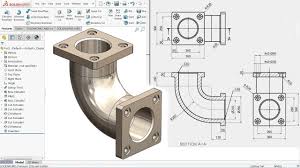
Solid works is a course that will equip you in modelling using software such as AutoCAD, welcome